Find Flatbed Boat Trailer with 1500 lbs Winch for Marine, Fishing, and Transport
Source 30 flatbed boat trailer with 1500 lbs winch options from verified suppliers in China. Compare specifications like payload capacity, dimensions, and certifications to find the right unit for marine, fishing, or transport applications.
Key considerations
Products List


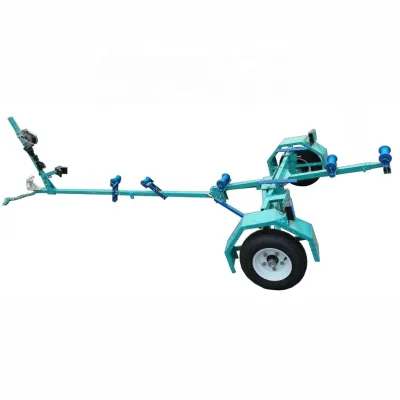


Comprehensive Sourcing Guide
Flatbed Boat Trailer with 1500 Lbs Winch Sourcing Guide
Sourcing a flatbed boat trailer equipped with a 1500 lbs winch requires distinguishing between general utility trailers and specialized marine transport units. The available market data indicates a diverse range of configurations, including flatbed, semi-trailer, and dedicated boat trailer types, with payload capacities observed ranging from 2000kg to 3000kg. Buyers must carefully align their specific vessel weight requirements with the trailer's maximum payload rating, as the presence of a winch does not automatically guarantee the structural integrity needed for heavy marine loads. The observed product attributes highlight that while some units are designed for general use, others are explicitly categorized for boat transport, necessitating a verification of the intended application before finalizing a purchase.
The procurement landscape for these units reveals significant variation in customization options and structural features, such as self-dumping capabilities and ABS integration. While some listings indicate the availability of customization, others present fixed specifications like a 5800mm loading length or specific tire dimensions of 14" x 185. A critical decision point for the buyer is determining whether the trailer requires a self-dumping mechanism or a standard flatbed configuration, as the observed data shows both "Self-dumping" and "Not Self-dumping" variants exist within the same product category. This distinction directly impacts the operational workflow and the specific mechanical components required for efficient boat loading and unloading.
Product Scope and Observed Listing Signals
When evaluating product listings, buyers should note that the term "flatbed" often appears alongside specific boat trailer models, yet the actual design may vary between a simple flatbed and a specialized boat trailer with bunks or rollers. The observed data includes models with loading lengths of 5800mm and total lengths of 6200mm, which are critical dimensions for ensuring the vessel fits securely on the deck. It is essential to verify the exact shape and type of the trailer, as the market contains both "Full Trailer" and "Semi-Trailer" configurations, each requiring different towing vehicles and hitch systems. Misinterpreting these classifications can lead to compatibility issues with the towing vehicle or the intended storage facility.
The observed price range of 7 to 11,000 USD suggests a wide spectrum of product quality and specification levels, likely correlating with the complexity of the frame, the quality of the galvanization, and the inclusion of specific accessories like winches. While the core keyword specifies a 1500 lbs winch, the provided facts do not universally confirm the inclusion of this specific accessory on every listed unit, requiring buyers to explicitly request this feature during the inquiry phase. Additionally, the presence of different packing methods, such as "in Panel," "Pallet," or "in Bulk," indicates that shipping costs and handling requirements will vary significantly depending on the specific model selected.
Technical Specifications to Verify
The structural integrity of the trailer is heavily dependent on the axle and suspension system, with observed data pointing to "Hot Dipped Galvanized" hubs, rims, axles, and leaf springs as a common standard. This corrosion-resistant treatment is vital for marine environments where exposure to saltwater and humidity is constant, yet buyers must confirm that this treatment applies to the entire chassis and not just specific components. The tire specifications observed, such as 14" x 185, must be cross-referenced with the maximum payload capacity, which ranges from 2000kg to 3000kg in the available data, to ensure the tires can safely support the combined weight of the boat and the trailer itself.
Dimensional accuracy is another critical technical factor, as the loading length of 5800mm and total length of 6200mm represent specific configurations that may not apply to all units. Buyers should verify if the trailer offers a "Customer" defined size or volume, as some listings indicate these attributes are customizable, while others present fixed dimensions. The net weight of the trailer, observed at 480kg for certain models, is a key metric for calculating the Gross Vehicle Weight Rating (GVWR) and ensuring the towing vehicle has sufficient capacity. Furthermore, the presence or absence of ABS systems and the specific model numbers, such as HLT-02 or HLT-5800, serve as unique identifiers that help in sourcing replacement parts and verifying the exact configuration of the unit.
Compliance and Safety Documentation
Safety and regulatory compliance are paramount when transporting heavy marine equipment, and the observed data lists several certifications including CE, ISO, DOT, and ISO/TS. These certifications indicate that the manufacturer adheres to specific international standards for quality and safety, but buyers must verify that the specific unit being purchased carries the valid certification documents for the destination market. The presence of standards like RoHS, SGS, and GMP suggests a focus on material safety and quality management, yet the buyer should request the actual test reports or certificates of conformity to ensure the trailer meets local road safety regulations.
In addition to general certifications, the specific application of the trailer, such as for "Boat" use, requires adherence to marine-specific safety standards that may not be explicitly detailed in the general product attributes. The observed "Heavy Duty" feature and "Heavy" bearing capacity imply a robust design, but these claims must be backed by engineering documentation or third-party test results. Buyers should also check for compliance with local vehicle codes regarding lighting, braking systems, and hitch requirements, as the "New" condition of the products does not automatically guarantee compliance with the specific jurisdiction where the trailer will be operated.
Cost Drivers and Commercial Terms
The commercial terms for these trailers are influenced by the degree of customization and the specific configuration of the unit, with observed MOQs ranging from 1 to 100 units. For buyers seeking a single unit or a small fleet, the lower end of the MOQ range is favorable, but larger orders may unlock better pricing within the observed 7 to 11,000 USD range. The cost is also driven by the origin of the product, with most units originating from Shandong Province, China, specifically Qingdao City, which affects shipping logistics and import duties. Buyers should factor in the total landed cost, including freight, insurance, and customs clearance, rather than focusing solely on the factory gate price.
Packing methods, such as "in Pallet," "in Panel," or "in Bulk," significantly impact the shipping volume and handling costs, which are often overlooked in initial price comparisons. A trailer packed in a panel or on a pallet may incur higher freight charges due to increased volume but offers better protection during transit, whereas bulk packing might reduce shipping costs but increase the risk of damage. Additionally, the lead time and production schedule, while not explicitly quantified in the provided facts, are likely influenced by the customization level and the specific model selected, such as the HLT-BT-108 or HLT-07. Buyers should negotiate clear delivery timelines and payment terms to mitigate the risk of delays in receiving the equipment.
Supplier Qualification and Quality Control
Supplier qualification should focus on verifying the manufacturer's location and their adherence to the observed quality standards, such as ISO9001 and the specific certifications listed. The data indicates that suppliers are primarily located in Qingdao, Shandong, China, a region known for its manufacturing capabilities, but buyers must conduct due diligence to ensure the supplier has a proven track record in producing marine trailers. The presence of "High quality" as a standard in some listings is a subjective claim that requires validation through customer references, site audits, or third-party inspection reports. Buyers should prioritize suppliers who can provide detailed documentation on their production processes and quality control measures.
Quality control checks should include a thorough inspection of the galvanization process, as the "Hot DIP Galvanized" finish is a critical factor in the longevity of the trailer in marine environments. Buyers should verify the thickness of the galvanization and the uniformity of the coating to prevent rust and corrosion over time. Additionally, the inspection should cover the structural integrity of the frame, the alignment of the axles, and the functionality of the winch and braking systems. For custom orders, it is advisable to request pre-shipment inspections to ensure that the final product matches the agreed-upon specifications and that all safety features are operational before the unit leaves the factory.
Long-Term Procurement Checks
Long-term procurement success depends on establishing a reliable supply chain for spare parts and maintenance support, particularly for components like tires, axles, and winches that are subject to wear and tear. The observed product models, such as HLT-02 and HLT-5800, should be evaluated for their parts availability and compatibility with standard industry components. Buyers should confirm that the supplier offers a warranty and has a clear policy for handling defective parts or manufacturing issues, ensuring that the trailer remains operational throughout its service life. The "Heavy Duty" and "Heavy" bearing capacity features suggest a long lifespan, but this is contingent on proper maintenance and the availability of replacement parts.
Finally, buyers should monitor the supplier's ability to adapt to changing market demands and regulatory requirements, as standards and safety regulations can evolve over time. The observed "Customer" defined size and volume options indicate a flexible manufacturing process, which is beneficial for future procurement needs. However, buyers should ensure that the supplier maintains consistent quality across different production batches and that any changes in design or materials are communicated and approved in advance. Establishing a long-term partnership with a qualified supplier will help mitigate risks and ensure a steady supply of high-quality flatbed boat trailers equipped with the necessary winch capacity.
FAQs
What is the maximum payload capacity for these flatbed boat trailers?
The maximum payload capacity is 3000kg for the HLT-02 model and 2000kgs for the HLT-5800 model. These capacities ensure safe transport for various boat sizes. Buyers should verify the specific model requirements against their vessel weight to ensure compliance with safety standards and optimal performance during transit.
Can I customize the size and volume of the trailer?
Yes, customization is available for both size and volume. The HLT-07 model offers customer-defined dimensions and volume options. This flexibility allows buyers to tailor the trailer to specific boat dimensions, ensuring a secure fit and optimal loading efficiency for unique vessel requirements.
What certifications do these trailers hold for international shipping?
The trailers hold CE, ISO, DOT, and ISO/TS certifications. Some models also include CCC and SGS standards. These certifications ensure compliance with international safety and quality regulations, facilitating smoother customs clearance and legal operation in various global markets for commercial and private boat transport.
How is the trailer frame protected against corrosion?
The hub, rim, axle, and leaf springs are hot-dipped galvanized. This finish provides robust protection against rust and corrosion, extending the trailer's lifespan in marine environments. The galvanized treatment ensures durability and reduces maintenance needs, making it suitable for frequent use in coastal or freshwater conditions.
What is the loading length for the standard flatbed model?
The loading length is 5800mm for the HLT-02 model. The total length is 6200mm, providing ample space for boat placement. This dimension is critical for ensuring the vessel fits securely on the deck, allowing for proper weight distribution and safe towing without overhang issues.
Are these trailers self-dumping or standard flatbed types?
The HLT-02 is a self-dumping flatbed trailer, while the HLT-5800 is a semi-trailer without self-dumping features. Buyers can choose based on their unloading preferences. Self-dumping models offer convenience for heavy loads, whereas standard types provide a stable platform for secure boat transport.